Fluoride is commonly added to municipal water supplies to support dental health. But not everyone agrees on how much is needed or whether it should be there at all. This is why most people turn to solutions like reverse osmosis.
If you’re wondering, does reverse osmosis remove fluoride? The short answer is yes.
Reverse osmosis systems are highly effective at filtering out fluoride along with other unwanted minerals and contaminants. In this guide, we’ll explain how RO systems work, what to know about fluoride in your water, and how to take control of what comes out of your tap.
What Is Fluoride and Why Is It Added to Water?
Naturally Occurring Fluoride
Fluoride is a mineral found in our bones and teeth. It also exists in air, soil, rocks, plants, freshwater, seawater, and a wide variety of foods. This mineral is woven into the environment and our daily lives.
In the United States, well water and groundwater often contain naturally occurring fluoride.
The amount depends on local geology. For anyone with a private well, fluoride levels can be higher or lower than in city water, which is why regular water testing at home matters.
Fluoride can also be added to drinking water, supplements, and dental products. Paying attention to both natural and added sources helps people make more informed choices about their water and health.
Why Cities Add Fluoride to Tap Water
Cities add fluoride to tap water because it supports strong teeth and healthier communities.
When public water systems include fluoride, rates of tooth decay drop, leading to fewer dental procedures and better long-term health for everyone.
The connection between fluoride and dental health has roots in research dating back to the 1800s. By 1945, Grand Rapids, Michigan, became the first city in the United States to add fluoride to its water supply. Other towns quickly followed, recognizing the benefits.
The CDC (Centers for Disease Control and Prevention) recognizes community water fluoridation as a safe and effective way to lower the risk of tooth decay. This approach helps people of all ages and backgrounds enjoy better oral health, no matter their income or where they live.
Public water fluoridation helps close health gaps between communities by providing everyone with the same basic protection every time they turn on the tap.
For those who want more control over their fluoride intake, modern home filtration options like reverse osmosis give families the flexibility to adjust their own water. Even as these systems become more popular, fluoridation remains one of the most cost-effective public health strategies in the country.
Health Impacts of Fluoride
Benefits at the Right Level
So, is fluoride bad for you? Fluoride has been added to the country’s public drinking water for decades, primarily because it has proven to be a safe, cost-effective way to prevent dental cavities and improve dental health.
Fluoride helps to repair tooth enamel damaged by bacteria and can also help reduce the acid in your mouth, thus preventing cavities from forming.
Fluoride is added to public water supplies to support better oral health. It helps strengthen tooth enamel and can reduce the risk of cavities, especially in communities with limited access to dental care. While its primary benefit is dental, it’s also seen as a simple, cost-effective way to improve public health over time.
When added at the right level, fluoride offers the most benefit. The CDC recommends a concentration of 0.7 parts per million in public water supplies, enough to repair enamel and lower oral bacteria, but not so much that it leads to unwanted side effects.
Over time, communities with water fluoridation see fewer cavities, lower dental costs, and healthier smiles for everyone.
Risks of Excessive Fluoride
There are critics of fluoridating public drinking water systems who say this is an individual decision that should not be controlled by the city in which you reside. On one hand, too much fluoride can cause dental fluorosis; which is a kind of tooth damage, or skeletal fluorosis: a weakening of the bones. These risks become more pronounced at higher concentrations.
At this level, both children and adults face a much higher chance of developing dental or skeletal fluorosis. Infants, young children, and those with kidney problems are particularly vulnerable, as their bodies may have a harder time processing excess fluoride.
Because of these risks, some households look for solutions that can manage or eliminate fluoride from tap water.
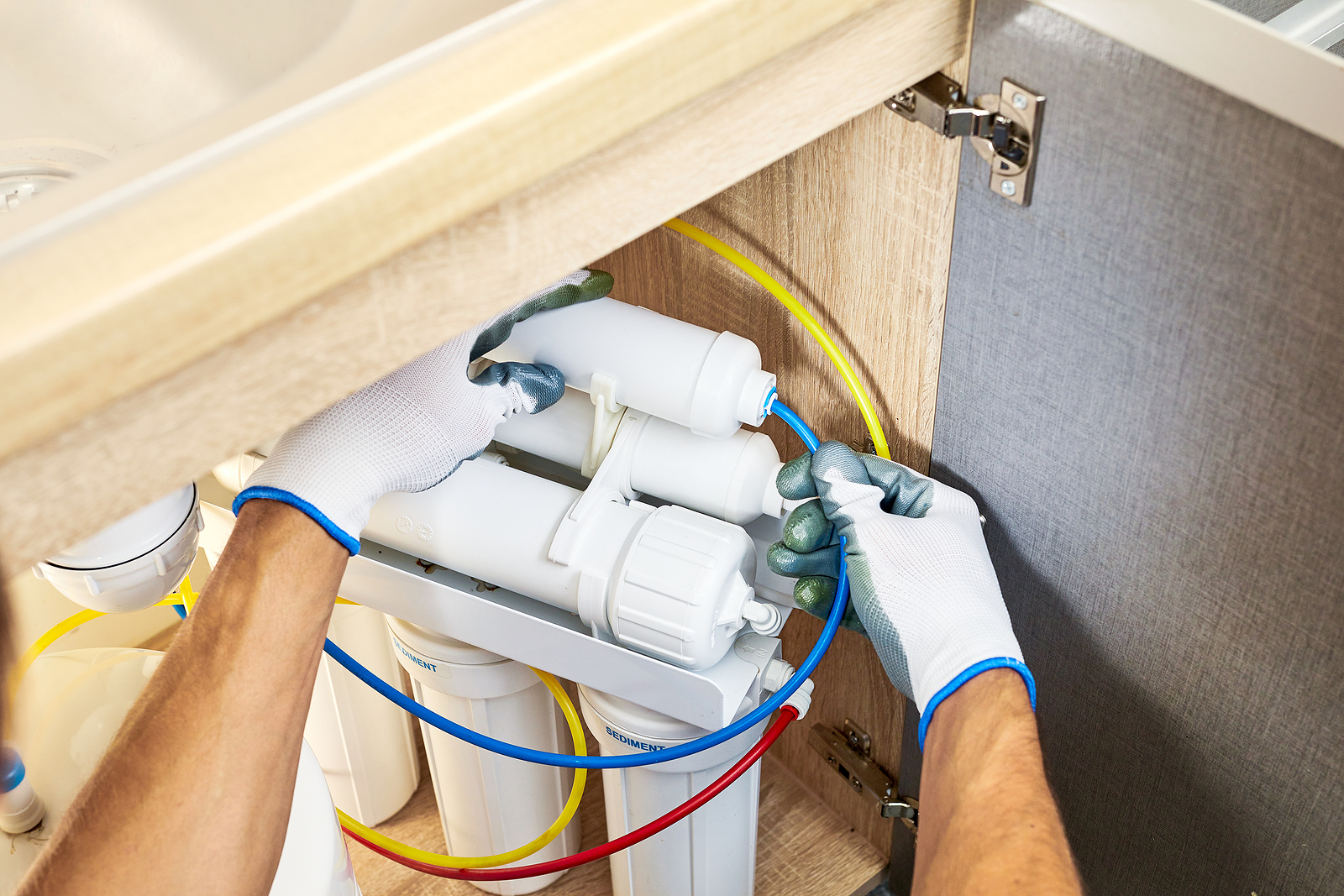
An RO filter can remove impurities, contaminants, and unwanted dissolved solids from your unfiltered water. One method of removing contaminants within freshwater by putting the water under pressure and pushing it through a special filter is called Reverse Osmosis.
Mineral contaminants cannot go through the filter, allowing fresh water to leave behind extra substances you don’t want in your drinking water.
This is essentially what happens when you install a Reverse Osmosis filter.
The RO filter’s semi-permeable membrane thoroughly filters out contaminants and dissolved minerals like lead, arsenic, iron, mercury, sodium, and, you guessed it, fluoride. So how does reverse osmosis actually work?
In nature, osmosis is the process where water moves from an area of low solute concentration to high solute concentration across a membrane, aiming for balance.
Reverse osmosis flips that script: water is forced in the opposite direction, from a high concentration of dissolved solids to low, using household water pressure. This pressure pushes water molecules through a semipermeable membrane, leaving behind contaminants, including fluoride and many others.
RO systems are remarkably efficient at removing fluoride, typically reducing fluoride levels by 85 to 95 percent. As a result, families can count on reverse osmosis not only for clean-tasting water, but for real reduction of potentially unwanted dissolved minerals.
What Else Does RO Remove?
Reverse osmosis systems do a lot more than remove fluoride. When water passes through the semipermeable membrane, it leaves behind a wide range of contaminants.
You get serious protection from heavy metals like lead and arsenic; two toxins nobody wants in their glass. PFAS chemicals, often called “forever chemicals,” are also filtered out, along with nitrates that can sneak into water from fertilizers or runoff.
But the process doesn’t end there. Most RO systems come with additional filtration stages for even better results.
Pre-filters capture sediment and larger particles before they reach the membrane.
Post-carbon filters polish the water, removing any lingering chlorine, bad tastes, or odors. With all these stages, reverse osmosis delivers water that’s clean, crisp, and ready for your family’s table.
Reverse Osmosis System Types
Point-of-Use (POU) vs. Whole-House RO
When it comes to reverse osmosis, families have a choice: focus on a single tap or cover the whole house.
Many start with a point-of-use system, placing it under the kitchen sink or on the countertop. The result is instant access to clean, filtered water for drinking, cooking, and even coffee. You taste the difference with every glass, and maintenance stays simple and affordable.
For households that want full coverage, whole-house reverse osmosis steps up the game.
Instead of filtering water at just one spot, these systems treat every drop that flows into the home. The water used for showers, laundry, and even the garden is all purified. It’s a big upgrade and a bigger commitment. Installation takes more time and budget, and most homes don’t need that level of filtration.
However, in places where water quality is a constant concern, whole-house RO can offer peace of mind that goes beyond the kitchen. Every faucet delivers water you can trust, turning a daily necessity into a consistent comfort throughout the home.
Rayne’s RO System
Rayne Water takes the guesswork out of choosing the right reverse osmosis filter.
Clear System:
Entry-level, budget-friendly solution
Provides reliable, everyday filtration
Great for families who want dependable drinking water with minimal fuss
Pure Plus:
Upgrades your filtration with a four-stage process
Removes a wider range of impurities
Delivers crisp, great-tasting water for cooking and beverages
Eradicator:
High-efficiency, comprehensive filtration
Handles the toughest water challenges
Maximum contaminant removal for serious peace of mind
All Systems:
Designed for long-term performance
Easy to use and maintain
Supported by Rayne Water’s expert service and reputation for quality
Is Fluoride Safe to Consume?
CDC and ADA Recommendations
Fluoridating public water supplies has strong support from the nation’s top health experts.
The Centers for Disease Control and Prevention (CDC) calls community water fluoridation one of the greatest public health achievements of the twentieth century.
The American Dental Association also supports this practice. For years, both organizations have pointed to clear evidence: adding fluoride reduces cavities and leads to healthier teeth for people of all ages.
Decades of research confirm their stance. Fluoride in the right amount helps protect teeth and cuts dental bills for families.
The CDC and ADA agree. Water fluoridation is safe and cost-effective. It improves the quality of life for entire communities, making every sip of tap water a little better for your smile.
Common Concerns Among Consumers
Strong endorsements by health organizations have not eliminated all concerns about fluoride in drinking water.
Many people want more control over what they drink each day. Some believe public water fluoridation should be a choice. The conversation continues in cities across the country as communities balance health benefits with personal freedom.
Every household has unique needs. This shift is leading more families to explore home filtration. Reverse osmosis systems appeal to those who want to decide exactly what goes into their water.
People act for many reasons. Some care about taste. Others focus on specific health goals or simply value the right to choose. The movement toward individualized solutions grows as families look for water quality that matches their own standards.
Why You Might Want to Remove Fluoride
Medical or Personal Reasons
People have many valid reasons for wanting to lower or remove fluoride at home.
Some are concerned about long-term exposure, while others prefer to have full control over what’s in their drinking water.
Parents with infants often take extra precautions, especially when preparing bottles of formula. Young children are more sensitive to high levels of fluoride, so families try to limit exposure in those early years.
For some, wellness is about keeping things simple. They look for water without additives or unnecessary chemicals, aiming for a pure experience with every glass.
Reverse osmosis systems put control in your hands. You can filter out what does not fit your needs or values. Each glass of water reflects a choice you made for your health and peace of mind.
When medical needs or personal beliefs shape daily decisions, having the ability to choose what goes into your water offers reassurance and confidence every day.
Taste, Preference, and Peace of Mind
Taste matters. Even subtle flavors in tap water can affect how refreshing it feels. A clean, crisp taste often makes drinking water more enjoyable and encourages better hydration.
When fluoride and other additives are removed with a reverse osmosis system, the water often takes on a fresher, lighter quality that many enjoy.
Knowing exactly what comes out of your tap brings real comfort. No need to wonder about hidden chemicals or lingering additives. Every glass reflects your personal preferences and standards.
For families who value clarity in their water, filtration is an easy choice. It means confidence with every pour and a sense of control that fits daily life. Each sip feels simple and honest, just the way you want it.
Alternatives to Reverse Osmosis for Fluoride Removal
Activated Alumina Filters
Activated alumina filters are another answer for those who want to remove fluoride from their water. These filters use a porous, highly absorbent form of aluminum oxide. As water passes through, the activated alumina grabs onto fluoride ions, reducing their presence.
It’s an efficient approach and works especially well in homes with moderately high fluoride levels.
But there’s a tradeoff: these filters need frequent replacement to keep performing at their best. If you’re looking for a solution you can set and forget, activated alumina might not be the easiest fit.
Still, it’s a solid contender for those who want a salt-free, compact alternative to reverse osmosis, especially for countertop or under-sink use.
Distillation Units
Distillation is one of the oldest ways to purify water, and it’s very effective at removing fluoride.
The process heats water until it becomes steam, leaving minerals, fluoride, and other contaminants behind. The steam cools, condenses, and collects as pure water in a separate chamber.
You get clean water with virtually no dissolved solids.
The downside? Distillation is slow. It’s also energy-intensive, making it less practical for families who need a lot of water each day. While these units are popular in laboratories and some off-grid homes, they rarely make sense for everyday kitchen use.
But for those who value purity above all else, distillation still holds a place.
Bone Char Carbon Filters
For anyone seeking a natural approach, bone char carbon filters provide an alternative way to remove fluoride. Made from charred animal bones, these filters have a unique structure that traps fluoride and some heavy metals.
They’re safe, effective, and add minimal chemicals back into the water.
However, bone char filters aren’t as common as other options. You may need to look harder to find the right unit or replacement cartridges. Maintenance is straightforward (swap the filters on schedule) but supply can be an issue.
Still, bone char is trusted by many for its long history of use and solid results, especially for those who prefer a natural filtration solution.
Install a Rayne Water Reverse Osmosis System Today
If you want to remove fluoride in your tap water completely, installing a home reverse osmosis system can make controlling your fluoride intake possible. With this system in place, you gain peace of mind knowing your water is free of unwanted minerals, impurities, and dissolved solids.
Rayne Water’s reverse osmosis system is designed for families who want confidence in every glass. It is a choice that supports your health and fits your standards. Start fresh with water that matches your lifestyle. Clean, clear, and truly yours.
Choose Rayne Water for Your Filtration Needs
Rayne Water offers a range of residential reverse osmosis systems to fit your lifestyle. You can keep it simple with the Clear system, add extra protection with the Pure Plus, or go for the Eradicator when you want the highest level of filtration.
If you care about what goes into every glass, choosing reverse osmosis gives you real control. Each system helps deliver water that tastes better and supports your well-being.
No matter your budget or your home’s unique needs, you’ll find a solution with us. Our team can help you choose the right system for your family, so you can drink with confidence every day.
Ready to make a change? Reach out to your local Rayne Water office. We’re here to help you enjoy clean, refreshing water at home.
FAQs
Does reverse osmosis remove fluoride from drinking water?
So, does reverse osmosis remove fluoride? Yes, reverse osmosis is highly effective at removing fluoride. The process can reduce fluoride levels by 85 to 95%, thanks to the semi-permeable membrane that blocks most dissolved minerals: including fluoride. If you want to take control of your fluoride intake, installing a reverse osmosis system is a reliable solution.
Does a reverse osmosis system remove fluoride as well as other contaminants?
Absolutely. A reverse osmosis system doesn’t just tackle fluoride: it also filters out other unwanted substances like lead, arsenic, nitrates, PFAS, sodium, and chlorine. The multi-stage process ensures your drinking water is clean, crisp, and safe for your family.
Do RO house systems filter out fluoride for the entire home?
Do RO house systems filter out fluoride? Whole-house RO systems can filter out fluoride and other contaminants from every tap, shower, and appliance in your home. However, these systems are more complex and expensive than point-of-use (under-sink) units, so they’re typically chosen for homes with severe water quality concerns or when comprehensive filtration is needed.
Is it safe to drink water that’s had all the fluoride removed by reverse osmosis?
Yes, it’s safe to drink water that’s been purified by reverse osmosis. Some people prefer to remove fluoride for health or personal reasons. If you wish to maintain some fluoride for dental benefits, you can supplement with dental products or discuss your needs with your dentist.
How often should I replace the filters in my reverse osmosis system to keep fluoride levels low?
For best performance, replace pre-filters every 6 to 12 months and the RO membrane every 2 to 3 years, depending on your water usage and quality. Following the manufacturer’s maintenance schedule ensures your system continues to effectively remove fluoride and other contaminants.
Ken Christopher is the Senior Vice President for Rayne Dealership Corporation. As a seasoned executive with over 20 years of leadership experience, he’s helped scale…
Join our newsletter
Subscribe our newsletter to receive the latest news and exclusive offers every week. No spam.


 GET A QUOTE